
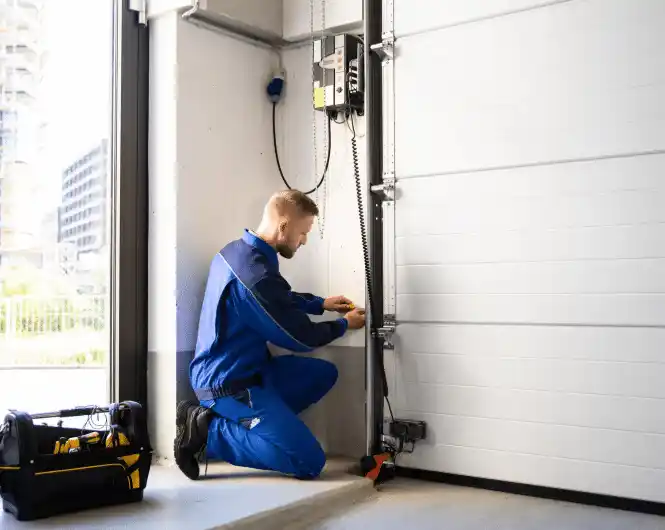
A garage door system can continue moving even when the opener suddenly stops responding, which often feels confusing and unexpected. This situation usually creates concern because the door itself appears functional, yet powered operation no longer works. Many homeowners assume the problem must be electrical or immediately catastrophic, even when the door still lifts manually. In reality, the door and the opener operate as separate systems that depend on proper coordination. Understanding why movement remains possible helps explain why failures often appear limited to one part.
When powered movement stops, the issue often points to force limits, safety sensors, internal wear, or connection failures rather than a complete system breakdown that immediately halts operation. In many cases, garage door opener repair becomes necessary even though the door still moves, because springs and tracks continue handling most of the physical weight. Over time, subtle problems within the opener grow quietly until automatic operation fails, creating confusion for homeowners. These failures rarely appear without warning signs, even when those signals were easy to overlook during daily use. Recognizing how the opener functions independently from the door’s manual movement helps clarify why this situation occurs and why timely attention matters.
Mechanical Separation Between Door Movement and Opener Function
Garage doors rely on springs and tracks to carry weight, while openers provide controlled motion. This separation allows manual operation even when powered systems fail. Many systems continue functioning mechanically long after electrical or internal components degrade. Understanding this separation explains why movement continues without powered assistance.
How Door Weight Is Managed Independently
- Torsion or extension springs carry most of the door’s weight during lifting and lowering cycles.
- Tracks guide door panels without relying on electrical components for structural support.
- Rollers allow movement along tracks even when motors are disengaged or disabled.
- Manual release mechanisms disconnect the opener from the door when needed.
- Balanced systems allow doors to remain stable at various positions without motor force.
- Mechanical components continue functioning unless physical damage occurs.
These elements explain why doors can move even after powered systems stop working. The opener does not lift the full door weight during normal operation. Springs do most of the work, which preserves manual functionality. When an opener fails, mechanical components still allow movement. This design prioritizes safety and accessibility during power loss or system failure.
Find out the warning signs that signal garage door opener repair is needed before a complete failure occurs by reading: Warning Signs That Point to Garage Door Opener Repair Before a Total Failure.
Safety Features That Disable Power Without Stopping Movement
Modern openers include safety features that intentionally stop powered movement under specific conditions. These features protect users and property from damage. When triggered, the opener disables itself while leaving the door mechanically functional.
Safety Systems That Interrupt Power Operation
- Force sensors shut down motors when resistance exceeds programmed limits.
- Photo-eye sensors prevent closing when obstructions block the doorway.
- Internal temperature sensors stop motors from overheating.
- Travel limit settings halt operation when the door position appears incorrect.
- Circuit protection prevents electrical damage during power irregularities.
- Emergency release systems disconnect motors during safety events.
These systems prevent dangerous conditions by stopping powered motion immediately. Manual movement remains possible because safety systems focus on motor control rather than structural operation. When safety features activate repeatedly, they indicate underlying issues requiring evaluation. Ignoring these signs often leads to repeated interruptions and eventual failure.
Learn how garage door opener problems can strain and disrupt the entire door system when left unaddressed by reading: How Garage Door Opener Problems Affect the Entire Door System.
Internal Wear That Affects Power Before Movement
Opener motors contain gears, bearings, and internal components that wear over time. This wear often progresses gradually without affecting door movement. Eventually, powered operation stops while mechanical systems remain functional.
Signs Internal Opener Components Are Wearing Down
- Grinding or humming sounds occur without door movement.
- Intermittent operation becomes more frequent over time.
- The opener responds slowly or hesitates during activation.
- Manual release works smoothly despite a powered failure.
- Lights activate without motor engagement.
- Circuit boards show intermittent signal loss.
Internal wear affects power transmission rather than door mechanics. Gears and bearings experience constant stress during operation. When these parts fail, motors cannot transfer force effectively. The door still moves manually because springs and tracks remain intact. Early recognition allows garage door opener repair before total failure occurs.
Explore when garage door opener repair becomes the safer option compared to continuing to use a malfunctioning system by reading: When Garage Door Opener Repair Is Safer Than Continuing to Use the System.
Electrical Issues That Disable the Opener Only
Electrical systems control the opener independently of door movement. Wiring issues, control board failures, or power supply problems can disable the opener without affecting mechanical components. These problems often appear suddenly.
Electrical Failures That Stop Opener Function
- Loose wiring connections interrupt power delivery.
- Control boards fail due to voltage fluctuations.
- Capacitors weaken over time, reducing motor startup power.
- Wall control wiring experiences a signal interruption.
- Power surges damage internal circuits.
- Transformer issues reduce available operating voltage.
Electrical problems prevent signal transmission rather than physical movement. The door still moves manually because the electrical control does not support the structural weight. Diagnosing these issues requires understanding how signals flow within the opener. Many homeowners mistake these failures for complete system breakdowns.
Misaligned Travel Limits and Force Settings
Travel limits and force settings control how far and how strongly the opener moves the door. Improper settings cause the opener to stop working even though the door remains functional. These issues often develop after adjustments or wear.
How Improper Settings Disrupt Operation
- Travel limits stop motion prematurely during opening or closing.
- Force settings register resistance incorrectly.
- Door position sensors lose calibration over time.
- Mechanical wear alters movement characteristics.
- Seasonal temperature changes affect track expansion.
- Improper installation leaves settings poorly calibrated.
Misalignment causes the opener to believe unsafe conditions exist, which reflects a misunderstanding of how garage door installation works at the mechanical and electronic levels. As a result, the motor disables itself to prevent damage or injury, even though no visible obstruction appears present. Manual movement remains possible because mechanical balance, springs, and tracks remain unchanged despite the electronic interruption. Professional evaluation restores proper calibration and system reliability by aligning sensors, force limits, and travel settings correctly. Ignoring these issues leads to repeated shutdowns and increased strain on components that were never designed to compensate for improper setup.
Connection Problems Between Door and Opener
The opener connects to the door through brackets, arms, and attachment points. These connections transfer motion from the motor to the door. When connections fail, the opener may run without moving the door.
Common Connection Failures That Cause This Issue
- Attachment brackets loosen due to vibration over time.
- Opener arms bend or crack under repeated stress.
- Fasteners pull away from door panels.
- Incorrect installation creates uneven load distribution.
- Wear at pivot points reduces effective motion transfer.
- Structural movement affects alignment.
Connection failures can isolate the opener from the door, sometimes prompting homeowners to consider whether garage door replacement is necessary when the system no longer responds reliably. The motor may still operate internally, but movement does not transfer to the door itself. Manual movement remains possible because the springs continue to support the door’s weight. These failures often appear suddenly after years of gradual loosening within brackets, arms, or mounting points. Early inspection prevents complete detachment and helps determine whether targeted repair or full replacement is the safer long-term option.
Control System Failures That Interrupt Communication
Modern openers rely on communication between remotes, wall controls, and internal boards. Communication failures stop powered operation without affecting door mechanics. These issues often appear intermittently before complete failure.
Communication Problems That Disable Operation
- Remote signal interference reduces command reception.
- Wall control wiring experiences signal loss.
- Circuit boards fail to process incoming commands.
- Memory corruption affects control logic.
- Antenna damage reduces signal range.
- Power cycling resets temporary functionality.
Communication failures disrupt activation rather than physical movement. The door still operates manually because commands never reach the motor. Diagnosing these problems requires evaluating signal paths. A professional assessment identifies whether repair or garage door opener replacement is appropriate.
Long-Term Reliability Through System-Level Evaluation
Understanding why openers stop while doors still move requires viewing the system as interconnected components. Mechanical, electrical, and control systems interact continuously. Failures rarely occur in isolation without contributing factors.
Why Ongoing Evaluation Preserves Performance
- Early wear detection prevents sudden failure.
- Calibration adjustments restore proper function.
- Electrical testing identifies weakening components.
- Mechanical inspection reveals hidden stress patterns.
- Professional oversight ensures safety compliance.
- Long-term reliability depends on balanced system performance.
System-level evaluation reveals issues before emergencies occur, especially when considering how different types of garage door designs place varying demands on openers, springs, and hardware. Many failures that later lead to searches for garage door opener repair near me could have been addressed earlier through routine inspection and adjustment. Reliable operation depends on recognizing early signs of strain or imbalance rather than reacting only after a breakdown disrupts daily use. Long-term performance consistently reflects the quality of the initial setup and the level of ongoing oversight applied over time.
Maintaining Dependable Operation Over Time
Powered and manual movement differences highlight how garage doors are designed for safety and redundancy. When openers stop working, underlying causes usually existed long before failure appeared. Mechanical movement continues because the system protects accessibility and safety. Recognizing this separation helps explain why sudden failures feel confusing.
Professional evaluation ensures that electrical, mechanical, and control systems remain aligned over time. Addressing minor issues helps maintain consistent operation and prevents emergencies. Reliable performance depends on understanding system behavior rather than assuming isolated part failure. Long-term care supports safety, predictability, and durability without relying on reactive repairs.
Brothers Garage Door Service provides reliable residential garage door installation, repair, and maintenance designed to keep homes safe and operating smoothly. Experienced technicians handle everything from minor repairs to full system replacements using high-quality materials. Flexible scheduling and dependable workmanship ensure long-lasting results. Family ownership supports a strong commitment to customer satisfaction.
Contact us today or give us a call to schedule professional garage door service.
Frequently Asked Questions
Why can a garage door opener stop working even though the door still moves?
A garage door can still move manually even when the opener is no longer functioning properly. We often see this happen because the opener and the door rely on different mechanical responsibilities. The door’s springs and cables may still support movement while the opener has lost power, alignment, or internal function.
How do garage door springs affect opener operation?
Springs carry most of the door’s weight and make lifting possible. We frequently find that when springs weaken or fail, the opener can no longer move the door, even though it may still move manually. The opener is designed to guide motion, not lift excessive weight.
Why does the opener disengage while the door still opens by hand?
Many openers are designed to disengage automatically when resistance or imbalance is detected. We often see this safety response occur to prevent motor damage. Once disengaged, the door may still move manually but not respond to the opener.
How can balance issues cause opener failure?
An unbalanced door places uneven strain on the opener during operation. We frequently see openers stop working when they are forced to compensate for added resistance. Manual movement may still feel possible, but powered operation becomes unreliable.
Why does the opener motor stop while the door is not stuck?
Opener motors can shut down due to overheating, worn gears, or electrical failure. We often find the door itself remains operable because the mechanical system is intact. The opener simply no longer can drive the movement.
How do force or safety settings affect opener function?
Openers are calibrated to stop if they sense unusual resistance. We frequently see doors move manually while the opener refuses to operate due to incorrect force settings. This behavior usually indicates a deeper balance or alignment issue.
Why does the door move unevenly when the opener stops working?
Uneven movement often signals cable, track, or spring problems rather than an opener failure alone. We commonly see the opener shut down to avoid damage while the door continues moving inconsistently. This separation is a warning sign that professional inspection is needed.
How can electrical issues stop the opener but not the door?
Power interruptions, wiring issues, or control board failures can disable the opener completely. We often see these problems leave the mechanical door system unaffected. Manual operation remains possible because it does not rely on electrical components.
Why does continued use make opener problems worse?
Using the door repeatedly when the opener is struggling increases internal strain. We often see motors and gears wear rapidly when underlying door issues are ignored. Continued use can turn a repairable problem into a full opener replacement.
Why should an opener failure always prompt a full system inspection?
Opener issues are often symptoms rather than isolated failures. We frequently find balance, spring, or cable problems contributing to the opener’s shutdown. A full inspection helps restore both safe door movement and reliable opener performance.