
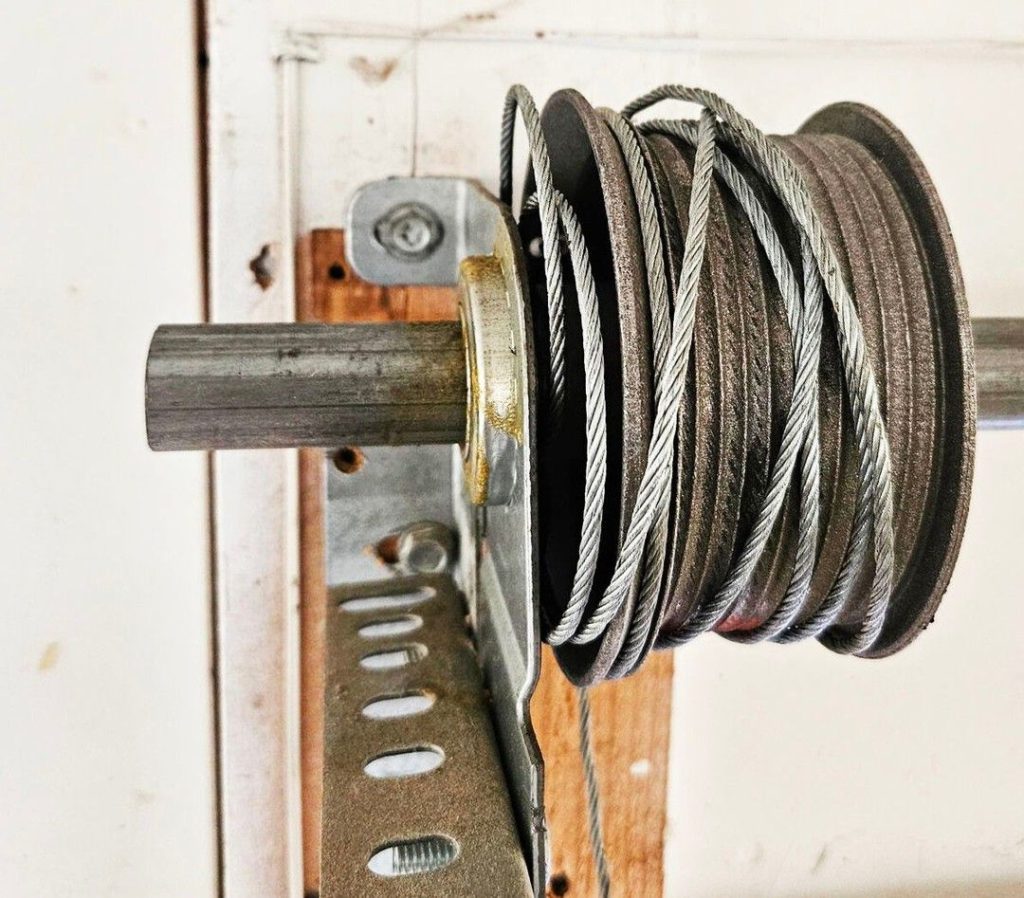
Garage door cables are the backbone of how the door lifts, lowers, and stays balanced through every single operation. When a garage door cable comes off one side, the entire system loses its balance and becomes a potential hazard to anyone who uses or stands near it.
Continuing to use a garage door in this condition puts the springs, tracks, opener, and panels under stress they were never designed to handle. This guide covers everything you need to know about why this problem is dangerous, what it does to your door, and what steps to take before the damage spreads.
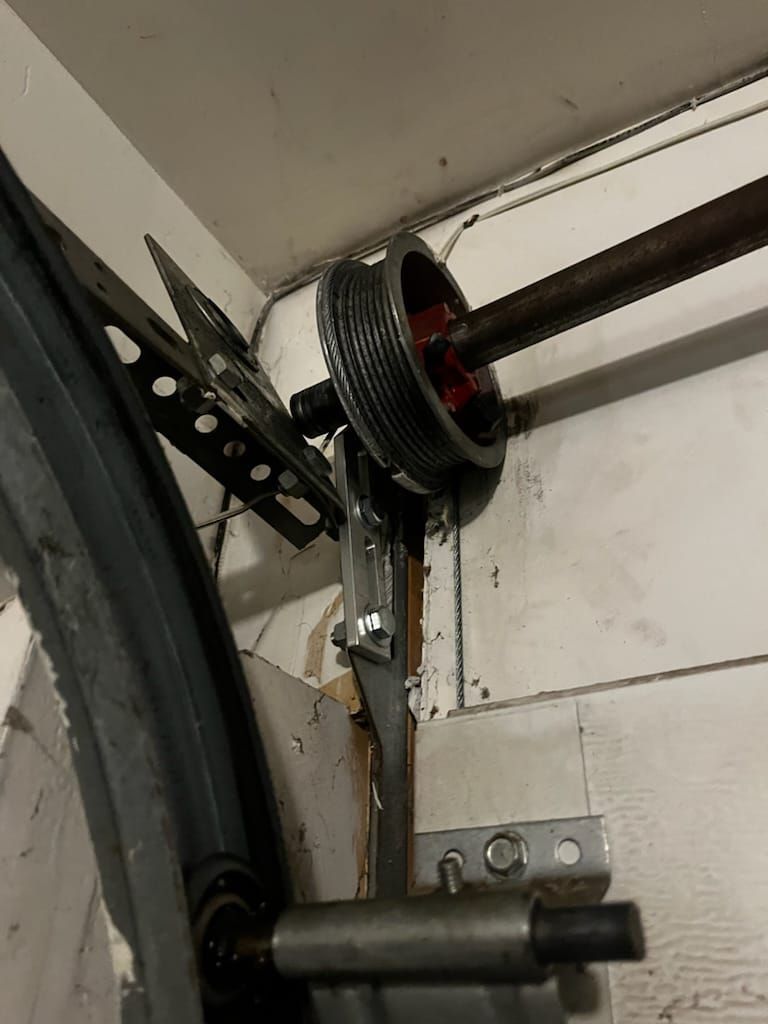
What Causes a Garage Door Cable to Come Off One Side?
Garage door cables do not slip off without a reason, and each cause behind this problem places a different part of the system under increasing stress, which eventually leads to failure.
Key causes of a garage door cable coming off one side include:
- Worn or fraying cable strands that have weakened from years of daily use.
- A loose or cracked drum that no longer guides the cable correctly.
- A broken torsion spring that removes the counterbalance the cable depends on.
- Track misalignment that forces the cable to pull at unnatural angles.
- Poor installation left the cable improperly seated from the start.
To learn what drives this problem and the damage it causes, read our guide on Garage Door Cable Came Off One Side? Causes and Solutions, which breaks down each cause and what it means for your door.
Warning Signs Your Garage Door Cable Came Off One Side
Broken garage door cables leave behind warning signs that are easy to spot when you know what to look for.
Warning signs your garage door cable came off one side include:
- The door looks uneven or tilted to one side when opening or closing.
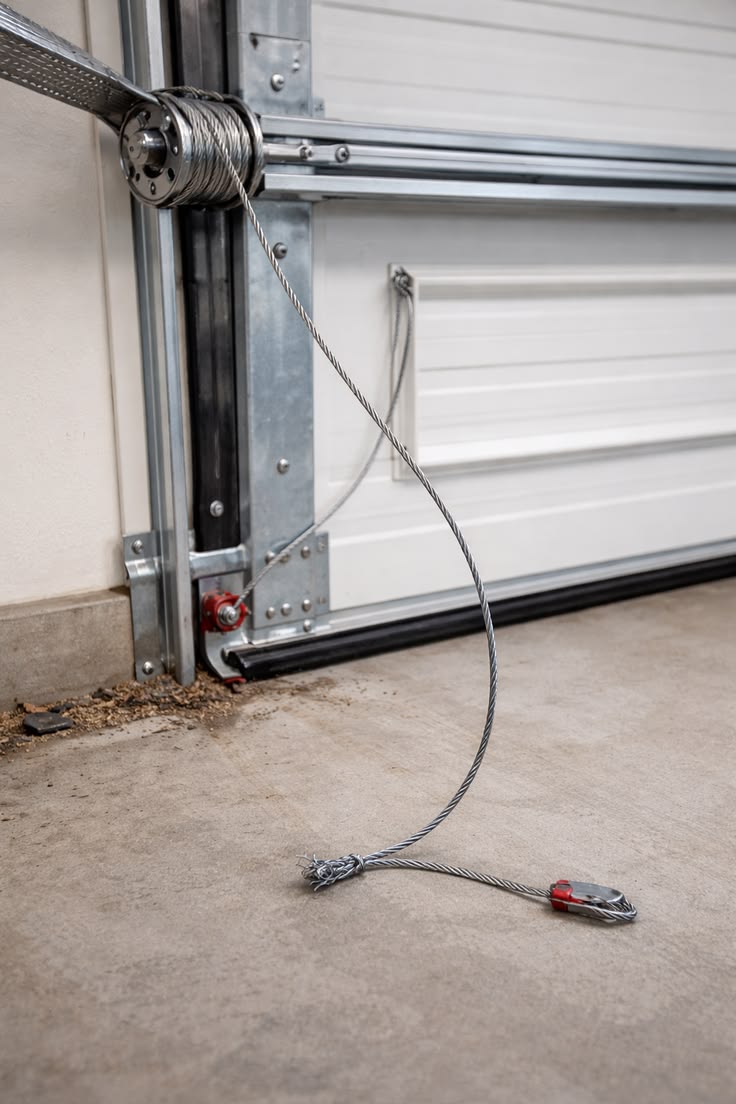
- A loose cable is visibly hanging or coiled near the bottom of the garage door.
- The door feels heavier than usual or moves more slowly when operated manually.
- Grinding, scraping, or popping sounds occur during opening or closing.
- The opener strains or struggles more than normal to move the door.
To catch every detail behind these signs and what each one points to, read our guide on Signs Your Garage Door Cable Came Off One Side, which covers each indicator and what it means for your door.
Is It Safe to Use a Garage Door With a Cable Off One Side?
Severe Imbalance and Track Damage
Uneven cable tension forces the full weight of the door onto one side of the track, and the track was never designed to bear that load alone.
Conditions that develop from severe imbalance include:
- One side of the door hangs visibly lower on the unsupported side.
- Track brackets pull away from the wall under the concentrated load.
- The door binds or jerks because it is no longer traveling in a balanced path.
- Continued use permanently bends the track on the overloaded side.
Forcing a door to run under this kind of imbalance puts the track system under a load it was never built to carry on one side.
Risk of the Door Falling Without Warning
A garage door weighing up to 400 pounds has nothing to prevent it from dropping suddenly when only one cable holds it in place.
Danger signs that the door is at risk of falling include:
- Visible sagging on the unsupported side as the remaining cable loses its grip.
- Shuddering mid-operation signals the cable is struggling under the full door weight.
- Bottom panels separate from the frame as the lower section loses support.
- Unstable and heavy manual operation throughout the full range of motion.
Operating a door in this condition puts anyone nearby at immediate risk of injury from a sudden, uncontrolled drop.
Overloading the Remaining Garage Door Cable
Every operation places double the load on the remaining cable, and that single cable was never engineered to carry the full weight of the door alone.
Signs the remaining cable is under excessive stress include:
- Metal strands show visible stretching or kinking beyond their working load limit.
- Added tension pulls the cable out of its drum groove, causing uneven winding.
- Manual lifting feels unusually tense because the cable carries more load than designed.
- Fraying starts at the connection points, where stress concentrations are highest.
Placing this level of stress on a single cable accelerates wear on the drum, pulley, and spring hardware connected to it.
Damage to the Garage Door Opener
Running the garage door opener against an unbalanced door forces the motor to work far beyond its designed capacity on every cycle.
Key signs the opener is taking damage include:
- Mid-cycle hesitation or reversal signals that the motor is detecting unusual resistance.
- Motor noise grows louder and more labored than during normal operation.
- The drive gears strip as the unbalanced load exceeds the torque they were built to handle.
- Opener performance declines progressively as internal damage accumulates with each cycle.
An opener that runs against an unbalanced door wears out its internal components far faster than its design life allows.
High Tension Spring Danger
Garage door torsion springs store enormous mechanical energy, and a missing cable makes that stored energy unpredictable and hazardous to anyone nearby.
Hazards that develop when spring tension becomes unequal include:
- Torsion bar tension becomes immediately unequal across both sides.
- A slipping cable can release stored spring energy without warning.
- Drums, brackets, and end bearing plates loosen under irregular load cycles.
- Extreme caution is required near any spring-connected component.
Unequal spring tension caused by a missing cable puts every component in the upper door system under unpredictable mechanical stress.
Possible Damages From Continued Use
Continued use of a garage door with a cable off one side causes damage that spreads across the entire system with every operation.
Possible damages from continued use include:
- Bent or broken tracks from the uneven load are pushing the door off its path.
- Cracked or warped garage door panels due to structural stress from uneven movement.
- Stripped drive gears and a burned-out opener motor from running unbalanced.
- Frayed or snapped lift cables from carrying double the load they were designed to handle.
- Loosened drums, brackets, and end bearing plates from irregular tension cycles.
Every cycle completed with a cable off one side adds measurable damage to the components that keep the door operating properly.
What to Do Immediately When a Garage Door Cable Comes Off
Taking the wrong action after a garage door cable comes off one side can turn a single repair into a full system breakdown.
What to do immediately when a garage door cable comes off:
- Disconnect the opener immediately to prevent further mechanical damage.
- Avoid touching the cable as the connected springs are under dangerous tension.
- Secure the door in its current position with a clamp on the track.
- Keep people and vehicles away from the door until it is repaired.
- Call a professional garage door repair technician to inspect the full system.
Taking these steps immediately protects the door, the opener, and everyone in the surrounding area from further harm.
What to Check on Your Garage Door Before the Technician Arrives
Knowing what to observe before the technician arrives gives them the information needed to diagnose and address the problem accurately.
What to check on your garage door before the technician arrives:
- Look for a loose or detached cable near the bottom corner brackets.
- Check the drum at the top corners for uneven winding or visible shifting.
- Inspect the tracks on both sides for bending or brackets pulling away from the wall.
- Look at the bottom panels for separation, warping, or misalignment.
- Note whether the rollers are still seated inside the track or have popped out.
Sharing these observations with the technician helps them arrive prepared with the right tools and parts for the repair.
Why Professional Garage Door Cable Service Matters
Garage door cable repair involves high-tension springs and precision hardware that demand trained hands and proper tools on every job.
Reasons professional garage door cable service matters include:
- Cables are connected to springs under extreme tension that only trained technicians can handle safely.
- A professional identifies what caused the cable to fail, not just what is visibly damaged.
- Certified technicians carry the right tools and garage door cable replacement parts to restore the full system correctly.
- Manufacturer warranties on cables, springs, and openers require professional installation to remain valid.
- Only a certified technician can confirm that the full system is balanced and operating correctly after the repair.
To know when a situation demands immediate professional attention, read our guide on Garage Door Cable Came Off One Side: When to Call a Pro, which walks through each scenario and what it means for your door.
How to Keep Your Garage Door Cables in Good Shape
A few consistent maintenance habits help keep garage door cables seated, tensioned, and working correctly year-round.
Ways to keep your garage door cables in good shape include:
- Annual professional inspections catch early cable wear and spring fatigue before failure.
- Twice-yearly lubrication on cables, rollers, and hinges reduces friction and prevents rust.
- Grinding or popping sounds during operation signal an early cable issue that needs attention.
- Periodic visual checks reveal fraying, kinking, or wear along the cable strands.
- Manual balance testing confirms that both cables are holding equal tension on each side.
Keeping up with these habits extends the life of the cables and reduces the likelihood of an unexpected failure.
A Garage Door With a Cable Off One Side Is a Job That Pros Must Handle
Using a garage door with a cable off one side is a direct safety risk that grows with every operation, and no amount of careful use makes it acceptable to keep running the door in that condition. Understanding why it is dangerous, what it does to the system, and what steps to take are what determine how well the repair holds.
Brothers Garage Door Service helps homeowners in Livonia, MI, determine whether their garage door is safe to use after a cable comes off and get it back to proper working condition. Contact us or give us a call today to have our technicians assess your system and restore your garage door to full working condition.