
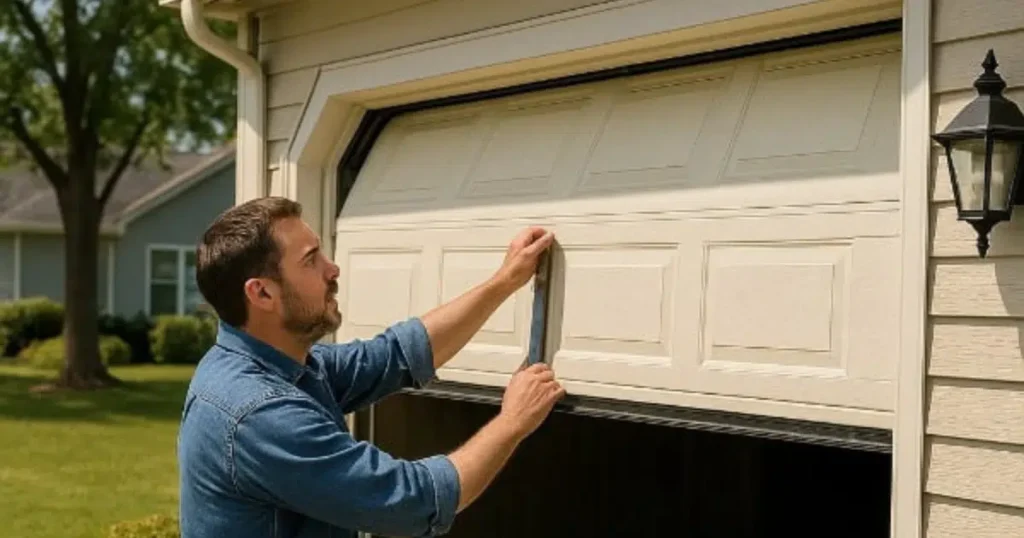
When a garage door stops halfway, it often signals a problem with the spring system, the opener settings, or the safety sensors that control the door’s movement. This issue can disrupt daily access, compromise your home’s security, and signal the onset of mechanical or electrical issues.
In Livonia, MI, seasonal temperature shifts and repeated daily use can accelerate wear on critical components, increasing the likelihood of sudden mid-cycle failure. Understanding the causes, safety risks, and next steps helps you determine whether simple troubleshooting is enough or if professional garage door repair is necessary to restore safe operation.
Why Does a Garage Door Stops Halfway in Livonia, MI?
A garage door stops halfway when the lift system detects abnormal resistance, a loss of balance, or an interrupted safety signal, so the door pauses mid-travel to reduce strain and prevent a safety hazard.
Common reasons this happens include:
- Spring tension drops and the door becomes heavier through the mid-travel range, increasing load on the lift hardware.
- Track friction, roller binding, or a lack of lubrication adds drag, disrupting smooth operation and triggering a stop.
- Safety sensors lose alignment or the beam weakens due to dirty sensor lenses or signal interference from nearby devices.
- Opener settings, including limit settings and force settings, are miscalibrated, so the garage door opener stops early.
- Electrical interruptions, such as weak or dead batteries, a tripped circuit breaker, or an inconsistent power supply, cause the cycle to pause unexpectedly.
To understand when a mid-cycle stop creates a real drop risk, read our guide on Is It Dangerous If a Garage Door Stops Halfway?, which explains the key safety warning signs to watch for before continuing operation.
What Causes a Garage Door to Stop Mid-Cycle?
Broken or Weak Torsion Springs
Weak torsion springs reduce lift support and increase load on the opener, which can interrupt travel before the door reaches full height.
Spring-weakening factors often include:
- High cycle count that gradually reduces spring strength and consistent lift support.
- Rust buildup that increases friction on the coil and speeds up metal fatigue.
- Uneven spring wear that creates imbalance and uneven door travel.
- Incorrect spring size from prior work that throws off spring tension and balance.
- Lack of regular maintenance allows wear to progress unchecked.
A spring balance depends on healthy coils, and broken garage door springs should be addressed fast to prevent repeated stalling and drop risk.
Lift Cable Tension Loss or Drum Slippage
Cable and drum problems can pull the door out of level, creating binding that makes the system stop to avoid overload.
Cable-and-drum failure drivers often include:
- Frayed cable strands that reduce load capacity and cause uneven lifting.
- Loose drum set screws that allow cable wrap to shift during operation.
- Off-center cable wrap that stacks unevenly, increasing resistance mid-travel.
- Worn bottom bracket attachment points that alter cable tension and tracking.
- Track or roller drag that forces the cable path to carry an uneven load.
Cable drift can pull the door off-level, and inspecting garage door cables early helps prevent binding and lift-path damage.
Misaligned or Obstructed Safety Sensors
Sensor interruptions can stop movement because the opener will not continue a cycle without a stable safety signal across the opening.
Beam-disruption triggers often include:
- Dirt, moisture, or residue buildup on sensor lenses weakens the infrared signal.
- Bracket movement from vibration that shifts the sensor’s aim and breaks alignment.
- Wiring loosening at the terminals causes intermittent signal drops and door-opener issues.
- Direct sunlight glare that reduces sensor reliability during certain times of day.
- Signal interference from nearby devices that disrupts stable detection and timing.
Correct sensor height, LED indicators, and alignment steps are outlined by Chamberlain Group, making it easier to verify whether photo-eye positioning is interrupting the cycle.
Track Obstructions and Roller Binding
Track friction can increase resistance at one point in travel, prompting the opener to stop to protect the motor and reduce the risk of further damage.
Track-binding sources often include:
- Debris buildup inside the track narrows the roller path and increases drag.
- Bent track sections, pinch rollers, and other disruptions disrupt smooth operation.
- Worn rollers that wobble and create uneven contact under load.
- Loose hinge hardware that shifts roller angle and increases friction.
- Lack of lubrication raises rolling resistance and strains the opener motor.
Targeted track and roller correction helps prevent repeated stopping and reduces garage door opener problems caused by overload.
Opener Force or Travel Limit Settings
Incorrect opener settings can cause a cycle to end early because the system believes the door has reached its limit or encountered excessive resistance.
Travel-control miscalibration sources often include:
- The limit settings are drifting, so the opener stops before reaching full travel.
- The force settings are too low, so normal resistance triggers an early stop.
- Adjustment screws are shifting slightly over time due to vibration and repeated cycling.
- Power supply interruptions that reset programming and create common garage door opener issues.
- Incorrect setup after a prior garage door opener repair, leaving the travel limits miscalibrated.
Chamberlain Group breaks down how manual adjustment screws control up-and-down travel limits, showing why mis-set limits can stop the door before it completes a full cycle.
Logic Board or Motor Overload Protection
Internal protection can interrupt operation if the system detects strain or heat, preventing continued travel until conditions stabilize.
Overload-protection triggers often include:
- Opener motor overheating from repeated cycles or heavy door weight.
- Failing internal capacitors reduce motor efficiency and increase load.
- Weak or dead batteries are affecting the stability and responsiveness of accessories.
- Power source fluctuations that disrupt the logic board and create door opener issues.
- Common garage door opener problems in aging units that struggle under normal load.
A service call helps determine whether the interruption is due to a control board issue or a load-related problem that requires expert garage door repair.
Cold Weather Contraction and Hardware Resistance
Cold weather can increase resistance in moving parts, raising the load until the system stops, protecting the opener, and reducing safety risk.
Cold-weather resistance drivers often include:
- Thickened grease on rollers and hinges that increases friction during door travel.
- Metal contraction that tightens track clearances and increases drag.
- Brittle hardware that flexes less and transfers more load into the opener.
- Moisture freezing along the track or bottom seal adds resistance at startup.
- Lack of regular maintenance leaves parts less prepared for temperature swings.
Seasonal service focused on cleaning, lubrication, and balance checks supports proper operation and reduces repeat mid-cycle failure.

How the Counterbalance System Controls Door Movement
A counterbalance system controls door movement by using spring tension and lift cables to offset the door’s weight, keeping travel steady and preventing sudden drops or mid-cycle stops.
- Spring tension carries most of the door’s weight, so the opener only guides motion.
- Lift cables evenly distribute the spring support, so both sides rise at the same rate.
- Cable drums keep wrap consistent, so the lifting force stays smooth through the cycle.
- Rollers and hinges reduce friction, so the door glides rather than binding in the track.
When spring support and cable tracking remain balanced, the door moves smoothly, and the opener is less likely to stop early under strain.
When the Garage Door Stops and Reverses Instead of Closing
A garage door can stop and reverse during closing when the system detects a safety interruption or travel resistance that makes continuing the cycle unsafe.
- Safety sensors lose the beam due to misalignment, dirty sensor lenses, or glare from direct sunlight.
- Track drag and roller binding increase resistance, so force settings trigger a reversal.
- Opener settings drift, causing limit settings to end the cycle early or reverse unexpectedly.
- Wiring issues or power supply instability create signal dropouts that interrupt the closing cycle.
- A door unbalanced by reduced spring tension creates load spikes that trigger a stop.
To narrow the most likely trigger and what you can safely inspect first, read our guide on What to Check When a Garage Door Stops Halfway, which lists the key checkpoints that point to the real cause.
Why a Garage Door Opens Halfway Then Stops During Lifting
A garage door may open halfway, then stop when lifting load increases mid-travel, and the opener responds to strain, resistance, or an unstable lift path.
- Spring tension drops, leaving the opener motor to carry more door weight than it should.
- Track friction or roller binding creates drag that peaks at a specific point in the vertical track.
- Opener settings, such as force settings, are too low, so normal resistance triggers an early stop.
- A power source interruption or weak batteries causes the garage door opener to pause mid-cycle.
- Common garage door opener issues include internal overheating; shut the system down until it cools.
Checking lift balance, track resistance, and opener behavior helps pinpoint the mechanical issue before repeated cycling leads to further damage.
Safety Concerns When a Garage Door Stops Halfway Up
A garage door that stops halfway up can pose serious safety concerns because the door’s weight may not be fully supported, leaving the opening unstable.
- Sudden door-drop risk increases if spring tension is failing or if the lift cables are slipping.
- High-tension parts can shift under load, turning a mid-cycle stop into a safety hazard.
- Excessive motor strain can damage internal gears, necessitating garage door opener repair.
- Pinch points around hinges, rollers, and brackets become more dangerous during unstable stopping.
- Home’s security can be compromised when the door stays partially open and cannot lock properly.
A stalled door can shift without warning, so garage door emergency service is the safest next step when stability is uncertain.
What to Do Immediately When Your Garage Door Won’t Open All the Way
When your garage door won’t open all the way, the safest next step is to stop repeated cycling and focus on basic checks that reduce strain and prevent further damage.
- Stop using the remote control for repeated open-close tests, since added strain can worsen common garage door problems.
- Check the power source at the outlet and confirm the circuit breaker has not tripped.
- Use the wall switch once to confirm the opener responds, then stop if movement remains unstable.
- Pull the release cord only if the door is in a stable position, and avoid lifting if the door feels unusually heavy.
- Clear the track area and confirm stored items are not pressing into the roller path or binding the door’s movement.
- Clean the sensor lenses with a soft cloth and confirm that the safety sensors are aimed at each other and that the indicator lights are steady.
To follow a safe repair path and the right diy fixes to try first, read our guide on How to Fix a Garage Door That Stops Halfway in Livonia, MI, which outlines practical steps to take before a service call.
Professional Diagnosis Versus DIY Troubleshooting
A professional diagnosis pinpoints the exact cause of a garage door that stops halfway, while DIY troubleshooting is best for simple checks that do not involve high-tension parts.
Area | DIY Troubleshooting (Safe Checks) | Professional Diagnosis (Best Results) |
Goal | Confirm simple causes | Identify the true root cause |
Power & Controls | Replace dead batteries, test the wall switch, and reset the circuit breaker | Test power supply, wiring, and door opener issues |
Safety Sensors | Clean sensor lenses with a soft cloth, and confirm alignment | Find faulty sensors and signal interference |
Track & Rollers | Clear debris, note binding, listen for unusual noises | Correct track alignment and roller wear |
Opener Settings | Check limit settings and force settings history | Calibrate opener settings for proper operation |
Springs & Cables | Visual inspection only | Restore spring tension and lift balance safely |
Best Next Step | Minor issues | Expert garage door repair and garage door service |
Combining basic checks with expert garage door opener repair reduces further damage and restores smooth operation.
Preventive Maintenance to Reduce Mid-Cycle Failures
Preventive maintenance helps stop mid-cycle failures by keeping lift parts, sensors, and settings stable.
- Clean sensor lenses with a soft cloth and keep safety sensors aligned.
- Replace weak batteries before they affect the remote control or wall switch response.
- Check the circuit breaker and power supply to keep the garage door opener consistent.
- Apply proper lubrication to rollers and hinges to reduce friction and support smooth operation.
- Schedule routine garage door service to check spring tension and opener settings.
Regular maintenance keeps parts in good condition and lowers the chance of the door stopping mid-cycle again.
Stop the Repeat Stalling and Restore Full Door Travel
A garage door stops halfway when the lift balance, safety sensors, or the garage door opener cannot complete a stable travel cycle, and repeated attempts can increase strain and lead to further damage. Taking the right next steps early protects your home’s security, reduces safety hazard risk, and helps restore smooth operation in Livonia, MI.
Brothers Garage Door Service provides expert garage door repair and garage door opener repair for common issues, including faulty sensors and settings, spring tension problems, and mechanical issues. Contact us or give us a call today to schedule a service call with a local technician you can trust.