
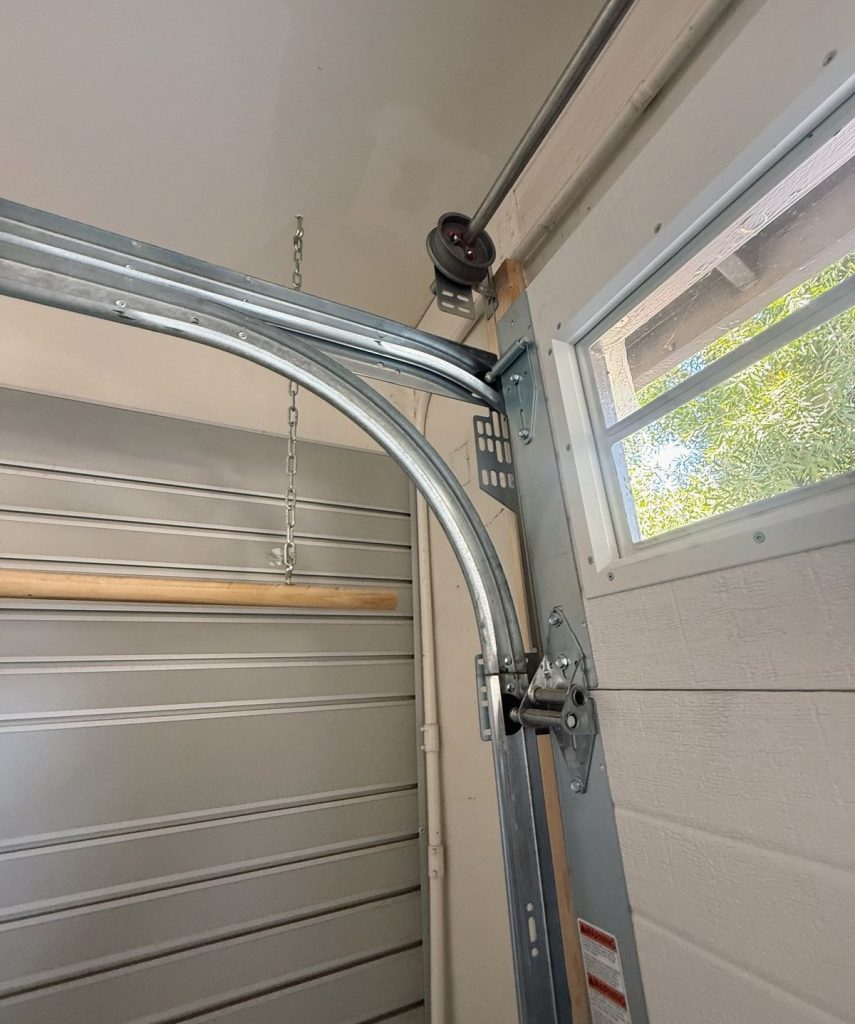
Garage door cables are built to keep both sides of the door lifting and lowering at the same rate, and when one comes off, the door immediately shows warning signs. These warning signs are directly tied to a cable that has lost its position and is no longer doing its job on that side of the door.
Left unaddressed, a garage door cable came off one side puts excessive strain on the springs, drums, and tracks until the entire system breaks down. This guide covers every sign that points to this specific problem, so the issue can be identified and resolved before it leads to a full system failure.
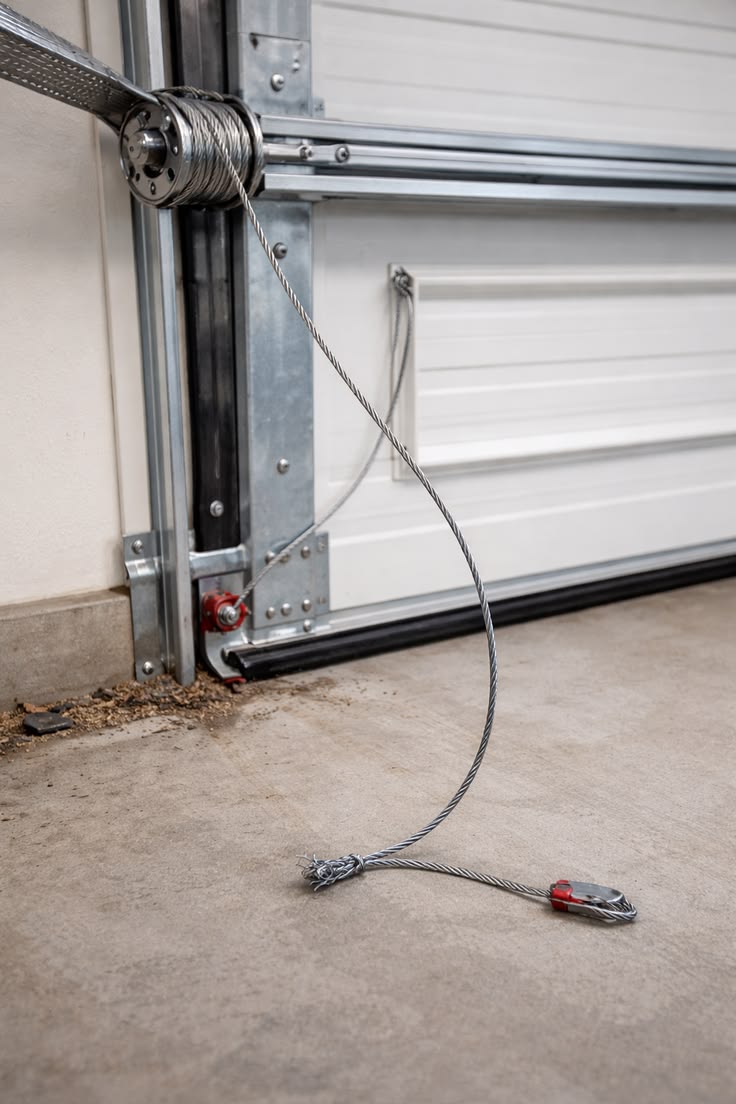
What Happens When a Garage Door Cable Breaks?
Garage door cables operate under constant tension on every cycle, and when one breaks or slips off, the mechanical balance that the entire system depends on is immediately compromised on that side of the door.
Key things that happen when a garage door cable breaks include:
- Both sides of the door lose equal support, and movement becomes uneven.
- Drums, springs, and tracks absorb the extra load the cable was carrying.
- The garage door opener strains against the imbalance, risking a burnout.
- The remaining cable on the other side takes on more tension than it was designed to handle.
- Every cycle completed under these conditions adds more wear to the surrounding components.
To understand what triggers this kind of failure, read our guide on Garage Door Cable Came Off One Side? Causes and Solutions, which covers every root cause and the damage it creates across the system.
Common Causes of a Garage Door Cable Coming Off One Side
A garage door cable came off one side due to mechanical failure, putting the entire system out of balance.
Common causes of a garage door cable coming off one side include:
- Broken garage door springs shift the full lifting load onto the cables, forcing them off the drum.
- Fraying cable strands weaken over time until the cable loses its grip on the drum.
- Poor installation causes the drum to misalign, preventing the cable from winding correctly.
- Extreme temperature changes cause metal contraction and moisture buildup, which weaken the cables.
- Bottom-bracket damage loosens the cable anchor, pulling the cable out of position.
These causes work against the cable’s ability to remain in position and keep the door running as a single-balanced system.
Signs Your Garage Door Cable Came Off One Side
Crooked or Tilted Door Appearance
A door that no longer sits level in the frame is a direct sign that a garage door cable came off one side and lost its tension.
Visual indicators of a crooked or tilted door include:
- One side hangs noticeably lower than the other due to the loss of cable support.
- The gap between the door and the floor is wider on the unsupported side.
- The door panels in the lower section appear compressed or misaligned on one side.
- The door frame appears uneven when viewed straight on from the outside.
Loss of cable tension on one side directly causes the door to tilt and lose its alignment in the frame.
Visible Slack or Hanging Cable
Lift cables that are properly wound stay taut against the drum and show no visible looseness along the track.
Signs of a slack or hanging cable to look for include:
- Cable appears loose, coiled, or pooled at the bottom of the garage door.
- Visible slack runs along the vertical track on the affected side.
- Cable sits outside its drum groove instead of winding neatly around it.
- Kinked or tangled sections appear near the bottom bracket anchor point.
A cable sitting outside its drum groove will not rewind correctly on its own and will continue to loosen with every cycle.
Uneven Movement When Opening or Closing
Balanced cable tension on both sides allows the door to travel in a straight and even line during every cycle.
Movement patterns that point to a cable off one side include:
- One side rises faster or higher than the other during the opening cycle.
- The door jerks or lurches at certain points along the track during travel.
- The garage door opener works harder than usual on one side because of uneven load distribution.
- Movement stops abruptly before the door reaches its fully open position.
Uneven movement on both sides points directly to a cable that has slipped off, disrupting the door’s travel path.
Door Becomes Jammed or Stuck
An off-track cable creates an imbalance that forces the door to wedge itself diagonally inside the tracks.
Common jamming patterns to watch for include:
- Door stops halfway through its cycle and refuses to move in either direction.
- One side pushes hard against the track while the other side moves freely.
- Opener completes its full cycle, but the door never reaches its open or closed position.
- Manual operation feels blocked or heavily restricted on the affected side.
A door that jams repeatedly in the same position indicates a cable that has lost tension and is no longer guiding the door evenly along the tracks.
Unusual Noises Like Popping or Grinding
The strange sounds during operation signal that components inside the system are making contact in ways they are not designed to.
Sounds that point directly to a cable problem include:
- Loud popping or snapping occurs the moment the door starts its cycle.
- Grinding noise intensifies as the door travels further along the track.
- Rattling comes from the drum or pulley area on the affected side.
- A scraping sound develops from the loose cable rubbing directly against the track.
Grinding and scraping sounds indicate that metal components are in direct contact, accelerating wear on the affected hardware.
Door Feels Heavier on One Side
Garage door cables work with the torsion spring to offset the full weight of the door so it moves with minimal effort on every cycle.
Heaviness indicators that point to a cable issue include:
- The door requires significantly more force to lift manually on the affected side.
- The opener slows down noticeably during the lifting cycle due to uneven load.
- The door drops faster than normal on one side when lowered by hand.
- The door sits lower on one side when held at the mid-point during a balance test.
Without cable tension working alongside the spring, the full weight of the door shifts directly onto the opener and the hardware on the affected side.
What to Do Next When You Spot These Signs
Spotting the signs that a garage door cable came off one side means the door needs immediate attention before the problem affects other components in the system.
Steps to take right away when these signs appear:
- Stop using the garage door immediately and disconnect the opener.
- Do a visual inspection from a distance without touching the cables or springs.
- Avoid forcing the door open or closed in either direction.
- Contact a garage door repair technician to assess the system’s full condition.
- Keep vehicles and people away from the door until a professional has inspected it.
To know when the problem requires a professional, read our guide on Garage Door Cable Came Off One Side: When to Call a Pro, which outlines every situation that goes beyond what a homeowner should handle.
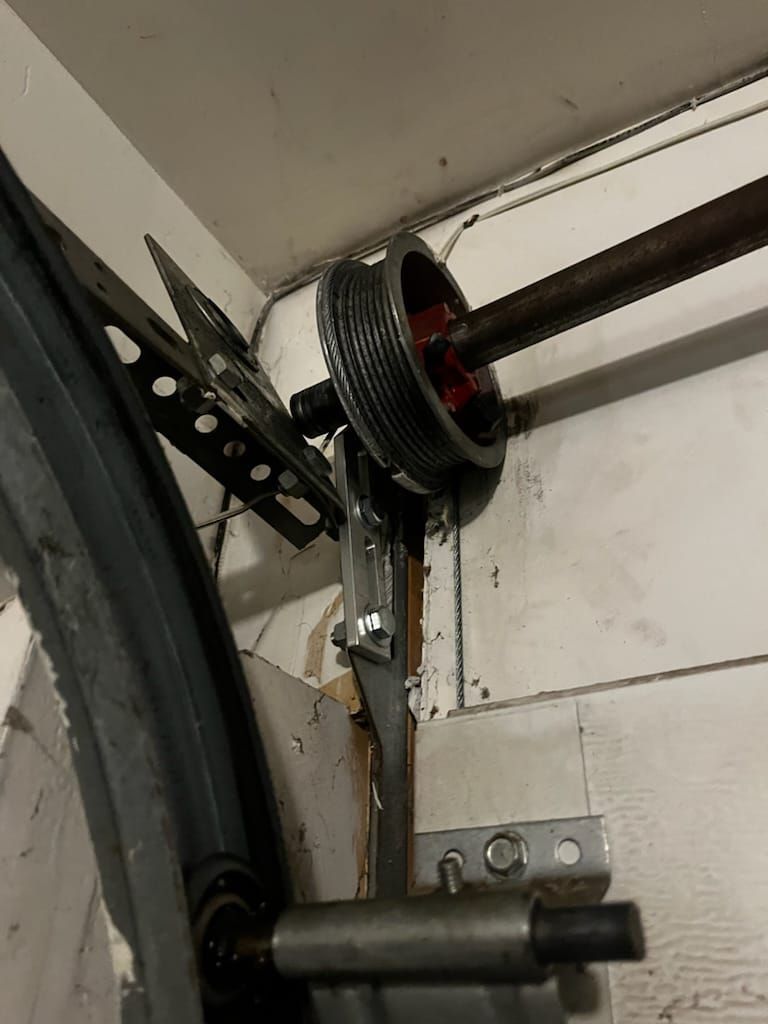
Why You Should Never Attempt to Fix a Garage Door Cable Yourself
Garage door cable repair involves high-tension components that can cause severe injury when handled without the proper tools, training, and experience.
Reasons why DIY cable repair puts you and your door at risk:
- Torsion springs store extreme mechanical energy that releases violently when disturbed without proper tools.
- Reattaching a cable incorrectly causes it to slip off again during the next operating cycle.
- Working near a loose cable without training increases the risk of sudden door collapse.
- Improper tension adjustment damages the drums, brackets, and tracks.
- A technician inspects the entire system before and after the repair to confirm that everything is properly balanced.
To learn about the risks of operating a door in this condition, read our guide on Garage Door Cable Came Off One Side: Is It Safe to Use?, which covers every safety concern tied to a cable that has come off one side.
Garage Door Cable Repair or Replacement: What’s the Right Call?
The condition of the broken garage door cables determines whether a simple fix or a full swap is the right course of action.
|
Situation |
Garage Door Cable Repair |
Garage Door Cable Replacement |
|
Cable slipped off the drum, but was still intact |
Repair garage door pulley cables and reattach them to their correct position |
Not necessary unless other damage is found |
|
Visible fraying or broken strands present |
Not recommended as fraying will worsen |
Full cable replacement is required |
|
Rust formed along the cable length |
Not recommended as rust weakens the strands |
Full cable replacement is required |
|
Cable is less than 7 years old with no visible damage |
Repair is sufficient if no other issues exist |
Not necessary at this stage |
|
Both cables show equal wear and age |
Repair on one side only is not advisable |
Both cables should be replaced together |
|
Drum or bracket damage was found alongside a cable issue |
All affected components must be addressed together |
Replacement depends on technician’s assessment |
A technician’s full assessment of the cable condition determines the correct course of action to restore proper door operation.
How to Prevent Your Garage Door Cable From Coming Off
Knowing how to fix a garage door cable that’s off track starts with understanding the preventive steps that keep the cables from coming off in the first place.
Preventative steps that keep garage door cables from coming off include:
- Annual professional inspections catch cable wear before it leads to displacement.
- Regular lubrication of cables, drums, and pulleys reduces friction and slows deterioration.
- Bottom brackets and anchor points must be checked for looseness and visible damage.
- Monthly balance tests reveal uneven tension before the cable slips off the drum.
- Loose or worn hardware must be addressed immediately before it affects cable position.
Addressing these maintenance steps consistently keeps the cable system in proper working condition and reduces the likelihood of unexpected displacement.
Don’t Ignore the Signs Your Garage Door Cable Came Off One Side
The signs that your garage door cable came off one side indicate a system already under stress, and every cycle the door completes in that condition adds more strain to the surrounding components. Recognizing those signs early and acting on them is what determines how well and how long the repair holds.
Brothers Garage Door Service is the garage door repair team that Livonia, MI, homeowners trust when a cable comes off one side, and the system needs a proper, lasting fix. Contact us or give us a call today to have our technicians assess your system and get your garage door back to full working condition.