

When your garage door stops working right, it is often because of a broken spring. This can be a real problem and needs to be addressed carefully and promptly. You may consider fixing it yourself to save time or money, especially if you are also considering whether a garage door replacement is needed. However, attempting a repair yourself can worsen the situation and increase the risk of damaging other parts of the system. A spring failure affects more than just the door’s ability to open and close, and a careful assessment is essential before deciding the best next step.
The springs in your garage door store significant tension, making them one of the riskiest components in the system. If they are not handled properly, that stored force can suddenly release and cause substantial property damage or serious injury. Working around a broken spring without the right tools or training can also interfere with cables, tracks, or the opener, creating even more instability. Because of these risks, leaving spring-related repairs to trained professionals helps ensure safety and protects the overall performance of your garage door.
The Critical Role of Garage Door Springs
The garage door springs play a big role in how a garage door works at home. These springs help with the heavy lifting each time you open or close your door. In Livonia, Michigan, most garage door systems use torsion springs mounted above the door or extension springs along the sides. Both help balance the door’s weight.
If the springs don’t work, your garage door gets too heavy to lift. The automatic opener can’t lift the door’s full weight on its own. Because of this, all homeowners need to know what signs show their garage door springs might be failing.
Learn why a broken garage door spring is dangerous and should never be handled without professional help by reading: Broken Garage Door Spring? Don’t Touch It—Here’s Why.
Understanding How Garage Door Springs Work
Garage door springs store and release large amounts of energy. This is what helps the heavy garage door move up and down safely. Torsion springs do this by twisting around a metal shaft. Then they push the door to give it the lift it needs to lift off the ground. This setup helps the garage door remain balanced during opening and closing.
Extension springs are a bit different. They go on each side of the garage door. When you open or close the door, these springs extend and then retract. The spring tension inside makes the door feel lighter than it is. You can open or close it manually or with an automatic opener without damaging other garage door components.
After a certain period, repeatedly lifting that weight wears out the metal in the springs. Once the springs reach their limit, they will break. If a spring snaps, the counterbalance on the garage door stops working properly. When this happens, calling a garage door repair expert is essential to fix the system and ensure safety.
See the key warning signs of a failing garage door spring and how experts address them safely and effectively by reading: Broken Garage Door Spring Symptoms You Should Never Ignore—and How Experts Fix Them.
Common Signs That Indicate Your Garage Door Spring Is Broken
It is important to spot the signs of a broken spring early. This helps keep your home safe and stops more damage to your garage door system. Most people first notice they have a problem when they hear a loud bang from the garage. This sound occurs when the garage door spring breaks under excessive pressure.
If you did not hear the loud noise, there are other ways to know that a broken spring may be causing trouble. The signs of a broken spring on your garage door are easy to see and should not be ignored. These signs are:
- You see a gap of a few inches in a torsion spring. This means the spring has snapped in two.
- Your garage door starts to open, then stops abruptly. It may also feel very heavy if you try to lift it by hand.
- The garage door moves unevenly. One side of the door opens faster than the other. This makes your garage door look crooked.
- The extension springs along the sides of the door are hanging loose or look stretched out.
When you see any of these signs, your broken garage door spring is no longer functioning properly. The door is not safe to use. Wait for the garage door to be repaired before using it again.
Find out what makes professional garage door spring repair safer, more precise, and longer-lasting than any DIY attempt by reading: What Truly Sets Professional Broken Garage Door Spring Repair Apart from DIY Attempts.
Why a Broken Garage Door Spring Poses Immediate Safety Hazards
When the spring on your garage door breaks, the door becomes difficult to open and a safety hazard. The main problem is that after spring break, there is no longer anything to balance the door’s full weight. That weight can be hundreds of pounds.
With the spring broken, the door is unstable and unsafe. It could fail at any time, with no warning. If you try to use the door like this, you put yourself and the things around you in danger. That’s why you should not open a garage door when the spring breaks.
For expert guidance on understanding how springs store and release energy, and why residential garage door springs require professional handling, review the article provided by Wikipedia.
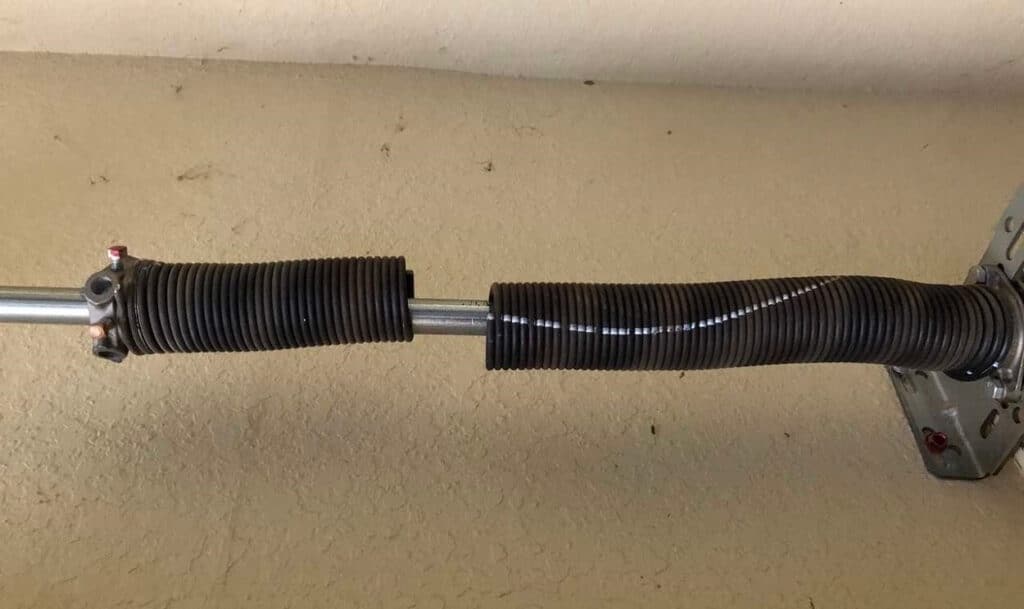
Risks of Sudden Garage Door Collapse and Personal Injury
The biggest safety risk when you have a broken spring in your garage door is that the door might fall fast and without any warning. The spring is there to help hold the heavy door up. If the spring is broken, the door’s weight is unbalanced. This lets gravity pull it down hard, which can injure people severely.
A broken garage door spring can turn the door into a serious safety hazard. If someone or something is in the way when the door falls, the consequences can be severe. The door is heavy, and if it comes down, it can cause significant injury or damage. That is why you should never stand or walk under a garage door with a broken spring.
That is why, given this safety risk, the best course of action is to call a garage door service. Only a skilled garage door repair technician will know how to secure the door and handle its heavy weight without causing injury. For garage door problems like a broken spring, let the professionals handle it.
For expert guidance on safely maintaining and replacing residential garage door springs, review the recommendations provided by the Door & Access Systems Manufacturers Association.
Potential for Secondary Damage to Garage Door Components
A broken spring on a garage door can cause more than injury; the sudden failure often triggers a chain of problems that lead to significant property damage. When the spring snaps, the door’s weight shifts instantly, placing excessive strain on the entire system, including the garage door cables, which are not designed to support the full load. This extra pressure can cause cables to fray, slip, or break, increasing the risk of the door becoming uneven or collapsing. The rest of the hardware is also not designed to handle this sudden stress, which is why a broken spring can quickly escalate into a larger, more dangerous problem.
If you try to use your automatic opener with a broken spring, you can damage the opener motor and gears. Other garage door components can also be damaged. This might mean you end up needing bigger and more expensive repairs, such as:
- Bent or ruined garage door panels if the door falls to one side.
- Warped tracks or a bent metal shaft because of the uneven weight and load.
- Garage door cable replacement is necessary if the cables break under excessive load.
Because of this, it’s important not to use the garage door if the spring is broken. It’s best to call a professional garage door technician immediately.
Consequences of Attempting DIY Garage Door Spring Repair
Attempting DIY repairs on a broken garage door spring can be very risky. These garage door springs are under significant tension. If you do not know what you are doing or do not have the right tools, that energy may cause the spring or winding bars to shoot out with excessive force.
This could lead to serious injury or property damage. What starts as a simple fix can end up as a much bigger problem for you and your garage door. A complete garage door spring replacement is not easy. It is best to let trained professionals handle it because they know what the risks are and how to use the right safety steps.
High Tension Risks and Serious Accidents During DIY Repairs
The biggest risk with DIY spring repair comes from the high tension in the spring coils. This tension is strong enough to lift a door that weighs hundreds of pounds. If you release the spring tension improperly, it could damage the spring or send tools flying across your garage. This can turn into a fast-moving projectile that can cause serious injury.
People who attempt this without proper training often don’t realize how much force they are dealing with. Even a small mistake can lead to serious problems. Professionals use special winding bars and proper tools designed to handle the high tension involved in spring removal and installation.
When you think about it, the danger and risk of a life-changing accident is not worth saving a little money. It is clear that you should always call a professional for spring repair. The skills and equipment these technicians have are needed to work with spring tension for your safety.
Common Costly Mistakes Homeowners Make with DIY Garage Door Spring Repairs
Even if a DIY repair avoids immediate injury, homeowners often make costly mistakes that lead to further problems and expenses down the road. One of the most common errors is installing the wrong type of spring or a spring with an incorrect weight rating, which can cause the door to become unbalanced and wear out the new spring and the opener motor prematurely.
Another common mistake is failing to replace both springs at once, since they typically wear at the same rate, so the second spring is likely to fail soon after the first. Below is a comparison of the risks associated with DIY versus professional garage door spring repair services.
These mistakes often end up requiring professional spring repair anyway, resulting in unnecessary costs and frustration.
Trusted Garage Door Repair Service
Fixing a broken garage door spring is not something to take lightly. The risks associated with this issue can be severe for safety. Garage door springs are tricky to handle, and attempting to fix them without proper training may lead to unexpected accidents or further damage.
You should know the usual signs of a broken spring. This helps prevent further problems. If your garage door is malfunctioning, it helps to understand why calling in professionals for garage door spring repair is a good idea. Experts can get the job done faster while keeping you safe.
Brothers Garage Door Service delivers comprehensive garage door services through versatile repair, maintenance, replacement, and installation. We repair failing openers, address worn hardware, correct operational issues, and provide fast response for urgent service needs. Our technicians are also equipped to perform complete installations, performance upgrades, digital keypad installations, and remote programming for every brand on the market. With a level of service that exceeds most garage door companies, your system stays in skilled, trustworthy hands.
Contact us today or give us a call for expert garage door care supported by full-service solutions and long-standing expertise.