
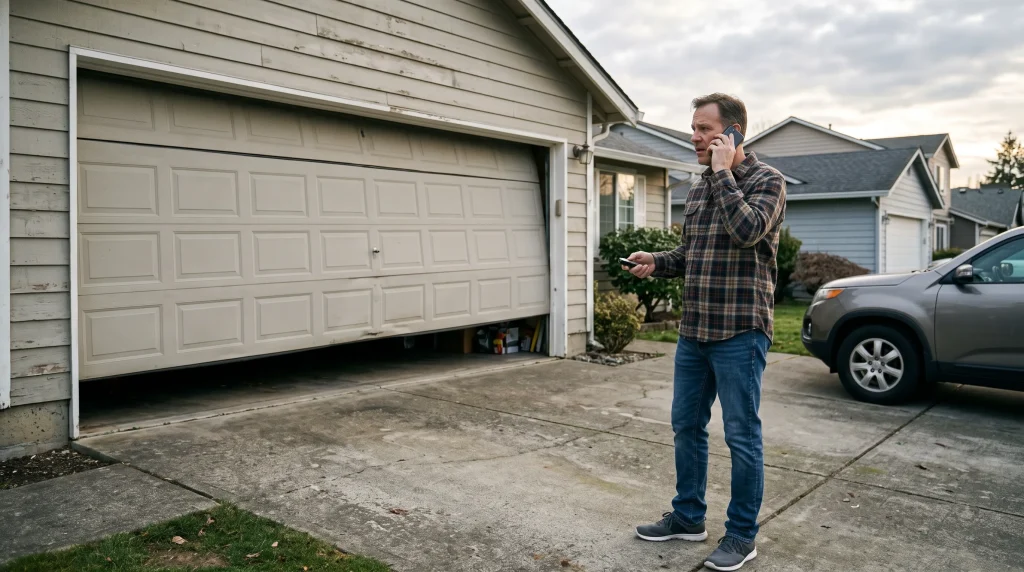
Calling a professional makes sense once basic troubleshooting fails to stop a garage door from opening on its own, especially when the issue points back to the garage door opener system itself. Warning signs like a burning smell, persistent error codes, or wiring damage confirm that professional service is the right next step.
Knowing exactly when to stop troubleshooting protects the opener system itself and, more importantly, the safety of everyone using the garage on a daily basis. This guide breaks down the specific signs that call for a technician, along with exactly what a professional visit actually involves from start to finish.
Key Takeaways
- Activity continuing after every basic fix usually signals a deeper issue.
- A burning smell or visible damage near the control panel warrants immediate attention.
- Wiring damage extending into the opener unit typically requires professional repair.
- Persistent error codes after a full reset point toward a hardware problem.
- A professional visit confirms the exact cause using specialized diagnostic tools.
Signs It Is Time to Call a Garage Door Professional
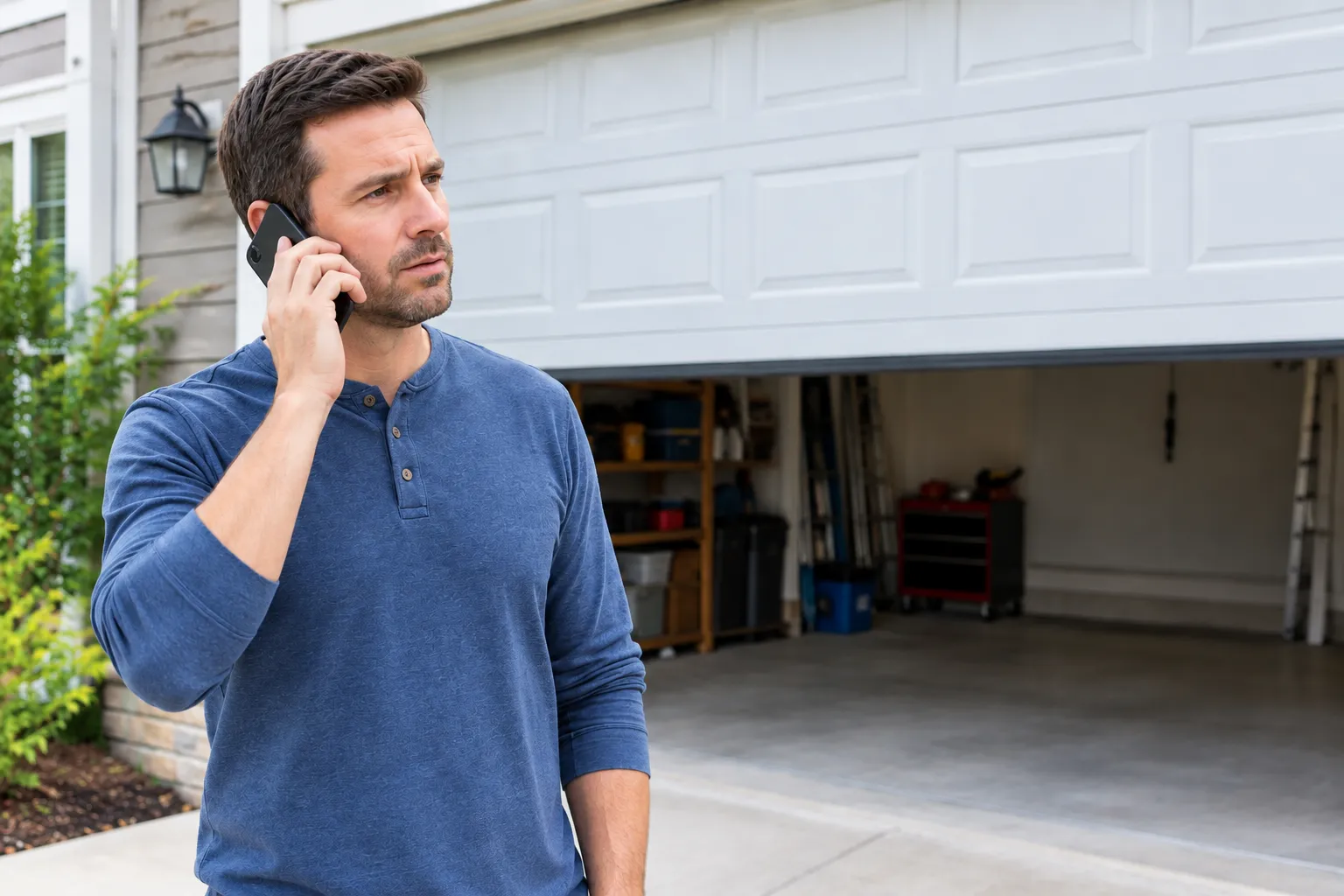
Stopping home troubleshooting and calling a technician becomes the right move once any of these specific warning signs shows up.
|
Sign |
What It Indicates |
Why It Requires a Professional |
|
Activity Persists After Fixes |
The confirmed fix did not address the actual cause |
A deeper diagnostic tool may be needed |
|
Burning Smell or Damage |
An electrical fault inside the system |
Fire and shock risk require immediate service |
|
Wiring Beyond the Wall Control |
Damage has spread into the opener unit |
Internal wiring work carries higher risk |
|
Persistent Error Codes |
A hardware component has likely failed |
Component-level diagnosis needs specialized tools |
|
Misalignment Beyond Sensors |
A structural or track-related issue |
Mechanical adjustment beyond basic realignment |
Waiting too long after any of these signs appear often turns a moderate repair into a costlier one nearby components end up affected too.
Activity Continues After Every Basic Fix
Trying every fix in order and still seeing the same unpredictable activity usually means the actual cause was never correctly identified or resolved.
Check whether each fix already applied actually held:
- Battery replacement and contact cleaning made no difference to the pattern.
- Wall control wiring was repaired, yet the activity continues unchanged.
- Sensor cleaning and realignment did not stop the reversal issue.
- A logic board reset failed to clear the unpredictable behavior.
- A surge protector was installed, but activity persists regardless.
To revisit each fix and confirm none were skipped or applied incorrectly, read our guide on What Are Common Fixes for a Self-Opening Garage Door?, which walks through every step in the exact order that resolves most cases.
A Burning Smell or Visible Damage Near the Control Panel
A burning smell or scorch marks near the control panel point toward an electrical fault that carries real fire and shock risk.
Look for any of these physical warning signs:
- A distinct burning odor comes from the motor unit or control panel area.
- Discoloration or scorch marks appear on any visible wiring or components.
- The control panel feels warm or hot to the touch during normal operation.
- Sparks or visible arcing occur near any exposed wiring or connections.
- The circuit breaker trips repeatedly when the opener attempts to run.
Any of these signs calls for immediate garage door emergency service rather than continued troubleshooting at home.
Wiring Issues Extending Beyond the Wall Control
Wiring reaching past the wall control and into the opener unit typically involves higher-voltage connections that carry more risk to handle without training.
Trace the damage using these specific markers:
- Exposed or frayed wiring appears inside the motor unit housing itself.
- Disconnecting the wall control wires does not stop the unpredictable activity.
- Multiple connection points throughout the system show visible damage.
- The opener unit shows signs of overheating near internal wiring.
- Testing individual components no longer isolates a single clear cause.
Problems at this level call for licensed garage door repair instead of a continued attempt at a home fix, since internal wiring carries real electrical risk.
Persistent Error Codes After a Complete Reset
Error codes that continue appearing after a full logic board reset usually point toward a hardware failure rather than a programming issue.
Rule out a software issue by checking for these results:
- The same error code returns immediately after each reset attempt.
- Multiple different error codes appear across several reset attempts.
- The LCD display shows garbled text or fails to display clearly.
- Reset attempts fail to complete, with the indicator light never confirming success.
- The manufacturer manual lists the code as a hardware-level failure.
To confirm whether this points toward a component failure rather than a fixable software issue, read our guide on How to Diagnose Why a Garage Door Opens on Its Own, which explains what each specific error code actually means.
Misalignment Beyond What Sensors Alone Explain
Physical misalignment affecting the door path, beyond what sensor cleaning alone can fix, often points toward a track or structural issue.
Watch the door itself for these physical symptoms:
- The door visibly binds or catches at a specific point during operation.
- Tracks show a bend, gap, or separation beyond the sensor area.
- The door hangs unevenly when fully closed, even after sensor adjustment.
- Unusual grinding or scraping sounds accompany the misalignment.
- The issue persists even after sensors test as properly aligned.
Correcting a bent or separated track calls for specialized tools, leverage, and hands-on experience that most property owners do not keep on hand at home.
What Happens During a Professional Service Visit
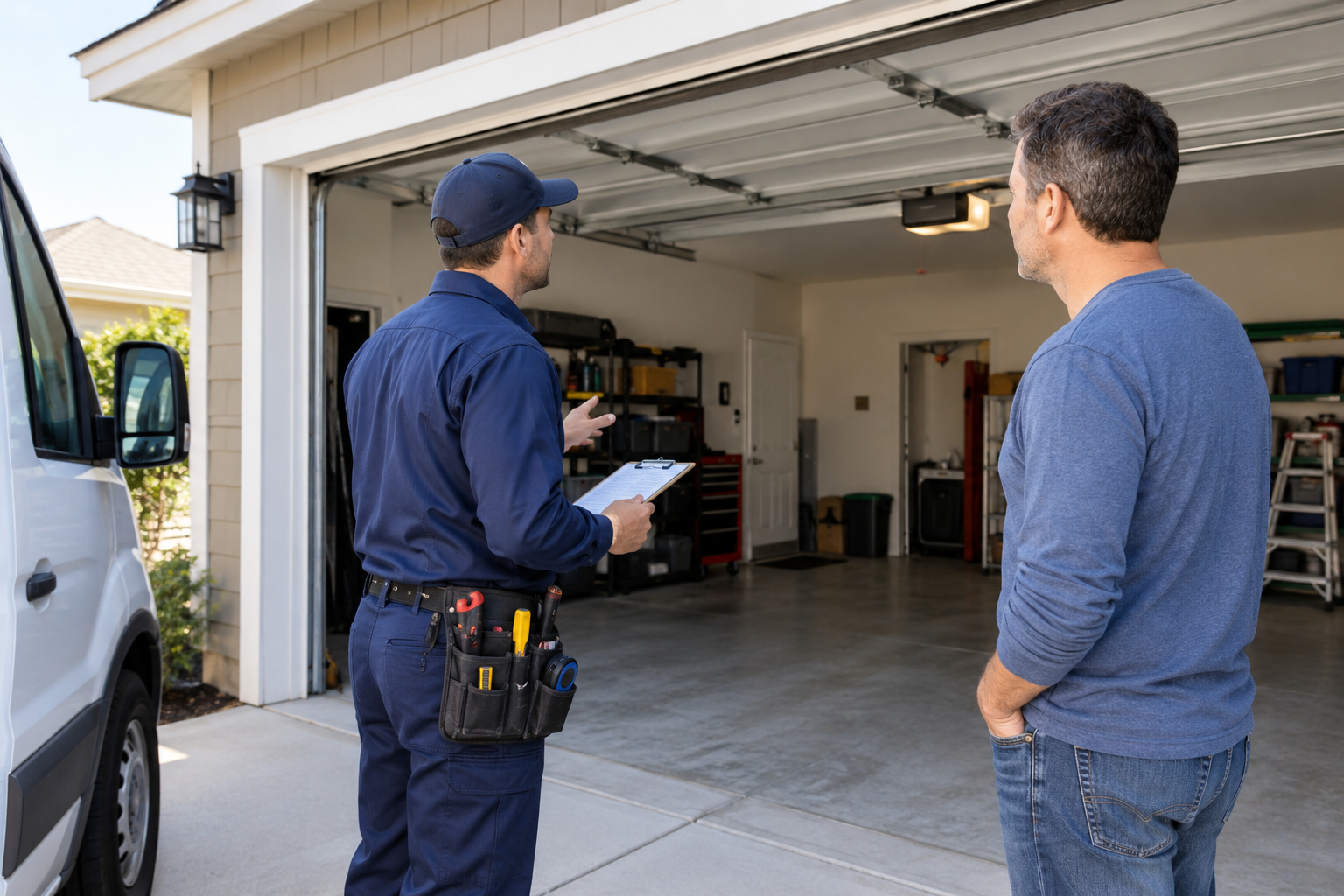
A professional visit follows a structured process designed to confirm the exact cause using tools and testing methods not typically available at home.
A standard visit generally moves through these stages:
- A full diagnostic test of the remote, wiring, sensors, and logic board.
- Specialized equipment used to detect signal interference or wiring faults.
- A physical inspection of the opener unit, motor, and internal components.
- Scheduling ongoing garage door maintenance to help prevent a repeat issue.
- A written summary explaining the confirmed cause and the completed repair.
To understand the full range of causes a technician checks during this exact visit, read our guide on Why Does My Garage Door Open on Its Own?, which breaks down every mechanical and electrical trigger covered during a professional inspection.
A Persistent Problem Justifies Bringing in a Professional
Activity that continues despite every reasonable fix, or that involves a genuine safety risk like exposed wiring or a burning smell, justifies moving past home troubleshooting entirely. A professional visit resolves what a home fix cannot, using diagnostic tools and training not available to most property owners.
Brothers Garage Door Service LLC sends licensed technicians across Livonia to confirm the exact cause behind persistent or unsafe opener activity. Contact us or give us a call today, and let our team resolve the issue with the tools a home fix simply cannot match.